
AI at ipyum

Building Something Real with Artificial Intelligence
ipyum is being built in one of the most remote parts of Indonesia. Most days, our challenges are very physical: moving timber, installing water pipes, building guest houses, transporting materials by boat and trying to keep a complex project moving when almost nothing is close at hand.
Yet behind much of this physical work is another kind of tool: artificial intelligence.
AI is not building ipyum for us. It cannot carry timber, repair a pump or finish a guest house. But it has become an increasingly useful partner in helping us think, communicate and turn ideas into something that people can see and understand.
Visualising ideas before we realise them
Designing in a remote location is expensive. Mistakes are difficult to correct, materials take time to arrive and even a relatively small change can create weeks of additional work.
We use tools from Artlist’s AI Toolkit and Google’s Nano Banana to visualise design ideas before we attempt to build them. They help us explore how buildings, interiors, signs, furniture and other details might look.





The images are not construction drawings, and they do not replace proper measurements or technical planning. Their value is that they make an idea visible.
It is much easier to discuss a design with the team when everyone can look at approximately the same thing, rather than trying to interpret a description or a rough sketch. We frequently use images to close language gaps.
We also use AI image tools to clean up photographs. Building sites are rarely tidy, and photographs taken in difficult light do not always communicate what is happening clearly. AI can help remove distractions, improve presentation and make the underlying subject easier to understand.
The important point is that the result must remain honest. Cleaning up a photograph should help tell the story more clearly, not create a false version of ipyum.
ChatGPT as a general-purpose project tool
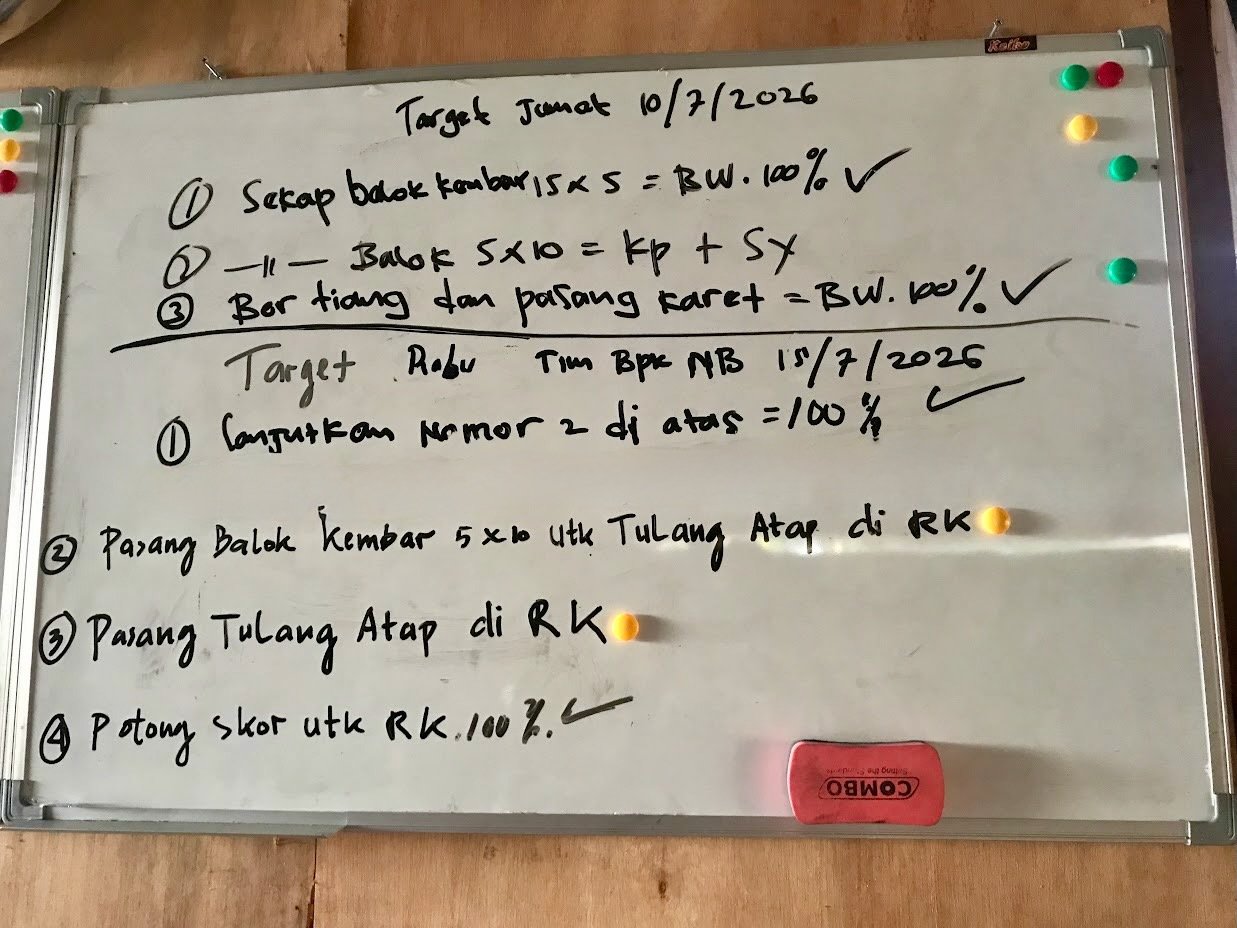
Chat GPT accurately extracts and translates text like this in one step in a few seconds with a prompt like “Estract text and translate to EN”
ChatGPT has probably become the AI tool we use most frequently.
At ipyum, one moment we may be working on the design of a wastewater pipe support, and the next we may be writing an answer to a potential guest, preparing instructions for the construction team or translating something into Bahasa Indonesia.
ChatGPT helps with all of these things.
We use it for creative design, technical problem-solving, strategy, writing, translation and research. It helps us compare materials, think through construction details, improve website text, prepare guest information and turn rough thoughts into something that can be shared with other people.
It is also useful for extracting and interpreting text from photographs. A supplier may send a picture of a handwritten list, a product label or a document. Instead of manually typing everything, we can use AI to identify the text, organise it and translate it.
This does not mean that the answers are automatically correct. AI can misunderstand a photograph, make a poor assumption or produce an answer that sounds much more certain than it should.
For technical decisions, especially those involving safety, legal requirements or significant costs, the output still has to be checked. AI is a very capable assistant, but it is not the person responsible for the decision.
That remains us.
Trying to build our own operational software
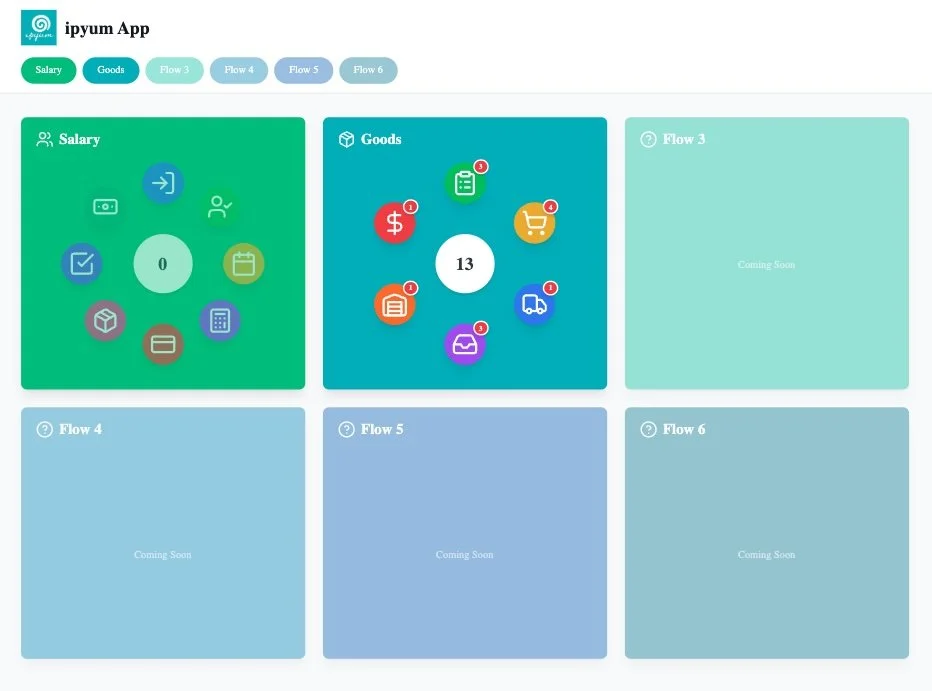
User Interface for Ipyum App, a home grown custom mini ERP system for ipyum’s Operations.
We have also experimented with using AI to create software for ipyum.
Our operations are becoming increasingly complicated. We need to manage construction work, purchasing, transport, inventory, staff schedules, maintenance, guest bookings and many other activities. Much of this currently happens through messages, spreadsheets and conversations.
We tried using Claude, Anything and Base44 to create software that could bring some of these processes together.
It did not work out.
The tools made it surprisingly easy to create something that looked like software. The difficult part was creating something reliable enough to become part of our actual operations.
A demonstration can be impressive while still being a long way from a system that people can depend on every day. Once real users, changing requirements, incomplete data and operational exceptions are introduced, the problem becomes much harder.
That attempt was unsuccessful, but it was not wasted. It helped clarify what we actually need, where our processes are still too complicated and which parts should be simplified before they are turned into software.
We will try again.
AI does not replace local knowledge
One of the risks of AI is that it can make knowledge appear universal.
ipyum is not being built in a universal environment. It is being built on Batanta, within a specific landscape, climate, culture and community. Local knowledge matters enormously.
An AI system may suggest how something is usually built, but our team knows which materials are available, how the weather behaves, what can be transported by boat and what will survive in a hot, wet and salty environment.
The best results come from combining both.
AI can provide options, comparisons and explanations. The people at ipyum provide practical experience, judgement and knowledge of the place.
Neither is sufficient by itself.
A tool, not the story
There is a temptation to describe every use of AI as revolutionary. Most of the time, it is more ordinary than that.
It helps us write faster. It allows us to explore more design ideas. It helps bridge the language gap between English and Bahasa Indonesia. It can organise information that would otherwise remain scattered across photographs, documents and messages.
Sometimes it saves hours. Sometimes it produces something useless. Occasionally it helps us see a problem in a completely new way.
AI will probably become more deeply integrated into how ipyum operates. We may eventually have systems that help manage maintenance, supplies, guest communication and daily work across the property.
But ipyum itself will remain deliberately real.
It is a place made from timber, stone, water, plants and the work of human hands. Artificial intelligence may help us design it, explain it and operate it, but the experience we are trying to create is the opposite of artificial.
That is why AI fits surprisingly well at ipyum.
It helps us deal with complexity behind the scenes, so that what our guests experience can remain simple, natural and real.
